GENDER, CLASS AND VALUE

Time: 
02/04/2013 08:00 - 02/06/2013 16:00

TIME: February 4-6, 2013

DEAD LINE FOR APPLICATIONS: December 3, 2012

Applications should be sent to InterGender Managing Director Dr Pia Laskar (Email: Pia.Laskar@liu.se)

MAXIMUM NUMBER OF PARTICIPANTS: 10

ORGANIZED BY
Unit for Gender Studies, Stockholm University, Sweden, in collaboration with InterGender (Swedish-International Research School in Interdisciplinary Gender Studies), Linköping University, Sweden.

COURSE COORDINATORS:
Hillevi Ganetz Professor of Gender Studies, Dept. of Ethnology, History of Religions and Gender Studies, Stockholm University, Sweden, Senior lecturer Pia Laskar and Björn Pernrud, InterGender Managing Directors and Professor Nina Lykke, Director of InterGender, Linköping University, Sweden.

MORE INFORMATION ON THE COURSE GENDER, CLASS AND VALUE:

TEACHER:
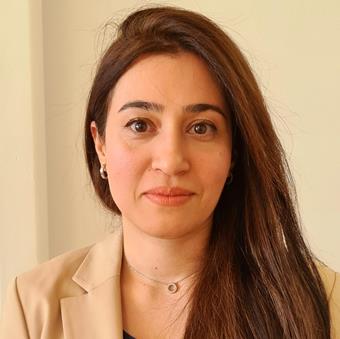
Beverley Skeggs is the Head of Department, Sociology at Goldsmiths University of London, U.K. She has also worked in the areas of Women’s Studies and Cultural Studies. Her main publications include The Media (1992), Feminist Cultural Theory (1995), Formations of Class and Gender (1997), Transformations: Thinking Through Feminism (2000); Class, Self, Culture(2004), Sexuality and the Politics of Violence and Safety (2004) (with Les Moran, Paul Tyrer and Karen Corteen) and Feminism After Bourdieu (2004 with Lisa Adkins). The Politics of Imagination (Sociological Review special issue 2011, with Joanna Latimer), Reality TV and Class(2011) and Reacting to Reality Television: Audience, Performance, Value (2012) (both with Helen Wood). She is the co-editor of The Sociological Review.

Course description:
The course pays close attention to how value has been attributed to certain practices and people. The organising principle is how the once separated gendered realms of affect and political economy have pervaded each other to make almost the whole of social life subject to the logic of capital relations. The commercial imperative to allocate a value to action can be evidenced across a range of social spaces, including the intimate. It begins with the historical feminist debates (now in revision) on ‘the domestic labour debate’ which drew attention to how distinctions are made between different gendered forms of labour (occupational-paid and intimate-domestic), moves through the imperatives of imperialism as value is attributed to particular bodies (or not), and explains how ideas of class and race became part of this evaluative classificatory process. It demonstrates how these materialize through the immaterial (sentiments such as disgust, contempt and anxiety), but also through new forms of compulsory individuality which demand that people perform their value in public. It ends with a close analysis of a recent audience research project on reality television which makes stunningly spectacular women’s (lack of) value.

Readings and structure:

Day One: History Reading

Marx, K – Theories of Surplus value (an amazing archive with many of the original texts on PDF)

Bottomore T. Dictionary of Marxist Thought
(we will use these to establish a basic understanding of the logical of capital and extraction of suplus value from labour)

(There are some new books that are highly readable such as Terry Eagleton’s ‘Why Marx was right’ (Yale) and J. Wolff’s ‘ Why Read Marx Today’ is a very easy introduction to the key concepts. These are not essential)

Thompson, J. 1996 Models of Value: Eighteenth Century Political Economy and the Novel, Durham, N.C.: Duke University Press. (this is a great analysis of how different gendered and classed models of value come into effect through European understandings)

Franklin, S. 2007 Dolly Mixtures: The Remaking of Genealogy, Durham: Duke University Press. Chapter One on Sex and Chapter Two on Capital offer brilliant (and funny) understandings of the commercialization of life.
Steedman, C. 2004 'The Servants Labour. The Business of Life, England 1760-1820', Social History 29(1): 1-29. (Asks what would Marx’s theory of capital look like if the largest group of labourers at the time of his writing- domestic servants- were included?).
Stallybrass, P, "Marx’s Coat", 1998, In, Spyer, P. Border Fetishisms. London: Routledge, p. 183-207 (another beautiful analysis of the significance of our relationships to objects based on value)
McClintock, A. 1995 Imperial Leather: Race, Gender and Sexuality in the Colonial Context, London: Routledge. (Chapters 1,2,3,5 but this is a stunning book- worth a read).

Day 1: into the more recent
James, S. The Nannies and the Mammies, 1983
Hartmann, H. & Sargent, L. The Unhappy Marriage of Marxism and Feminism, 1981 London: Pluto
Beechey, V. On Patriarchy, 1979, Feminist Review
Anderson, B. Doing the Dirty Work? The Global Politics of Domestic Labour, 2000 London
Hochschild, A. The Commercial Spirit of Intimate Life and Other Essays, 2003, LA Berkeley UCPress
Illouz, E. Cold Intimacies: The Making of Emotional Capitalism, 2007, Cambridge: Polity, p. 1-36
Federici, S. Caliban and the Witch, 2009, Autonomedia, p. 11-19
Weeks, K. The Problem with Work: Feminism, Marxism, Anti-Work Politics, and Postwork Imaginaries, 2011 Durham, Duke University Press.
Illouz, E. 2007 Cold Intimacies: The Making of Emotional Capitalism, Cambridge: Polity.

Day 2: Theories of Class and Gender
Bourdieu, P. 1987 'What Makes a Social Class? On the Theoretical and Practical Existence of Groups',Berkeley Journal of Sociology: 1-17.
Bourdieu, P. 1989 'Social Space and Symbolic Power', Sociological Theory 7: 14-25.

(then see feminist critique: Skeggs, B. 2004 'Introducing Pierre Bourdieu's Analysis of Class, Gender and Sexuality', in L. Adkins and B. Skeggs (eds) Feminism After Bourdieu Oxford: Blackwell.)

Tyler, C.-A. 1991 'Boys Will Be Girls: The Politics of Gay Drag', in D. Fuss (ed) Inside Out: Lesbian Theories/Gay Theories , London: Routledge.
Is updated and expanded (if interested) in Tyler, C.-A. 2003 Female Impersonation, New York and London: Routledge.
Martin, B. 1996 Femininity Played Straight: The Significance of Being Lesbian, New York: Routledge.
Skeggs, B. 2004 Class, Self, Culture, London: Routledge. Chapter Four on the ‘subject of value’
Skeggs, B. 1997 Formations of Class and Gender: Becoming Respectable., London: Sage. Chapter Five on Femininities

Day 2; Gendered Class Sentiments
Lawler, S. 2005 'Disgusted Subjects: The Making of Middle-Class Identities', The Sociological Review 53(3): 429-446.
Tyler, I. 2008 'Chav Mum Chav Scum: Class Disgust in Contemporary Britain', Feminist Media Studies 8(1): 17-34.
Walkerdine, V. 2012 'Shame on you! Intergenerational trauma and working-class femininity on reality television ', in H. Wood and B. Skeggs (eds) Real Class: Reality Television and Class, London: BFI/Palgrave.
Reay, D. 2007 'A Darker Shade of Pale? Whiteness, the Middle-Classes and Multi-Ethnic Inner City Schooling', Sociology 41(6): 1041-1060.

Day 3: Performing Value
Berlant, L. 2008 The Female Complaint: The Unfinished Business of Sentimentality in American Culture, London and Durham: Duke University Press.
Lawler, S. 2000 'Escape and Escapism: Representing Working Class Women', in S. Munt (ed) Cultural Studies and the Working Class: Subject to Change, London: Cassell.
Bernstein, E. 2007 Temporarily Yours: Intimacy, Authenticity and the Commerce of Sex, Chicago: University of Chicago Press.
Illouz, E. 1997 'Who will Care for the Caretaker's Daughter? Towards a Sociology of Happiness in the Era of Reflexive Modernity', Theory, Culture and Society 14(4): 31-66.
Duneier, M. 1992 Slim's Table: Race, Respectability and Masculinity, Chicago: University of Chicago Press.
McDowell, L. 2007 'Respect, Respectability, Deference and Place', GeoForum 38: 276-286.
we will then concentrate on the ESRC study on audience responses to reality tv

Skeggs, B. 2010 'The Value of Relationships: Affective Scenes and Emotional Performances', Feminist Legal Studies 18(1): 29-51.
Skeggs, B. 2009 'The Moral Economy of Person Production: The Class Relations of Self-Performance on 'Reality' Television', Sociolocical Review 57(4): 626-644.
Skeggs, B. and Wood, H. 2012 Reacting to Reality Television: Performance, Audience, Value, London: Routledge.

These will then develop into a theory of person value

Day 3: theories of person Value and Value Struggles
Skeggs, B. 2011 'Imagining Personhood Differently: Person Value and Autonomist Working Class Value Practices ', Sociolocical Review 59(3): 579-94.
Skeggs, B. and Loveday, V. 2012 'Struggles for Value: Value Practices, Injustice, Judgment, Affect and the Idea of Class', British Journal of Sociology 63(3): 472-490.

Supplementary reading:
Debord, G. A Sick Planet, 2003, Chapter ‘The Decline and Fall of the Spectacular Commodity-Economy, p. 1-35
De Angelis, M. and Harvie, D., (2009), ‘“Cognitive capitalism” and the rat-race: How capital measures immaterial labour in British universities’, Historical Materialism, 17, 3, 3–30.

Schedule:
The course begins at 9.00 day 1 and ends at 16.00 day 3.
Social activities evenings of day 1 and 2

Structure of the course:
The course consists of three days of lectures and seminars. Students are asked to have completed course readings before sessions in Stockholm.

The course will include two kinds of sessions: 1) lecture-discussion-sessions on the proposed readings. Course participants are expected to have read the relevant chapters/articles before the course.
2) group sessions with presentations of students' papers, where students are given the opportunity to present their doctoral research and receive comments from teachers and co-participants.
Participants will be divided into three working groups to make individual presentations and discuss research questions from their doctoral project.
Each of the three lecturers will have responsibility for one group each. Based on the research description, each participant is asked to make a presentation of her/his research project for 10-15 minutes, followed by 30 minutes for questions and discussion. All group participants are expected to read the papers of their fellow group members and be ready to give comments.

Preparation:
* See reading list. 

* Paper (2-5 pages describing research problems related to the PhD project of the participant) to be sent to InterGender Managing Director Björn Pernrud (Email: Bjorn.Pernrud@liu.se) AT THE LATEST TWO WEEKS BEFORE THE COURSE START; remember to mark it with your name and the course name.
* All participants are expected to read the papers of their fellow group members before the course and be ready to give comments in the group sessions.
* The students’ papers and some of the other readings for the course will be available to all the participants via our intra net.
 Books must be bought or borrow. More info on this will be given to registered participants.
Essay

* 15 pages to be handed in at the latest 3 months after the course; one copy should be sent to the teacher, who is going to evaluate it, and one to InterGender Managing Director Dr Björn Pernrud (Email: Bjorn.Pernrud@liu.se). The teacher has 3 months to evaluate the essay.

* The essay should strike a balance between addressing a theme, which have been part of course (lectures, discussions, reading material), and be relevant for the PhD research of the student.

* The essay should, moreover, be considered as an exercise in doing a written presentation to an academic readership, which is not familiar with the author's PhD research. It should constitute a whole and explain relevant contexts.

ACCREDITATION AND EXAMINATION
a) 7,5 ECTS Credits is given for active participation and a short paper, maximum 5 pages.
b) 15 ECTS Credits is given for active participation, + essay (evaluated as pass/fail). An essay should be of 10-15 pages. The selected topic shall be related to the course content and readings. The essay is to be sent to the teacher as well as to the academic coordinator no later than 3 months after the final day of the course.

Info on admission and grants can be found here.

Applications should be sent to InterGender Managing Director Dr Pia Laskar (Pia.Laskar@liu.se) no later than December 3, 2012.

InterGender: Swedish-International Research School in Interdisciplinary Gender Studies
The School is funded by The Swedish Research Council (Vetenskapsrådet). It is organized as a joint venture between Gender Studies Units and doctoral programmes at Linköping University (host university) and at eight other Swedish Universities: Blekinge Institute of Technology, Göteborg University, Lund University, Luleå Technical University, Stockholm University, Uppsala University, Umeå University, Örebro University and at three international partner institutions: Graduate Gender Program at Utrecht University (The Netherlands), The Finnish National Doctoral School of Women's and Gender Studies (Helsinki University, Finland) and Center for Transdisciplinary Gender Studies, Humboldt-Universität zu Berlin (Germany).

Location: 
Unit for Gender Studies, Stockholm
AttachmentSize
Gender, Class and Value.pdf532.31 KB